What is Kemalism?
The founding ideology of the Turkish Republic, built on six principles that transformed a collapsing empire into a modern secular nation-state.
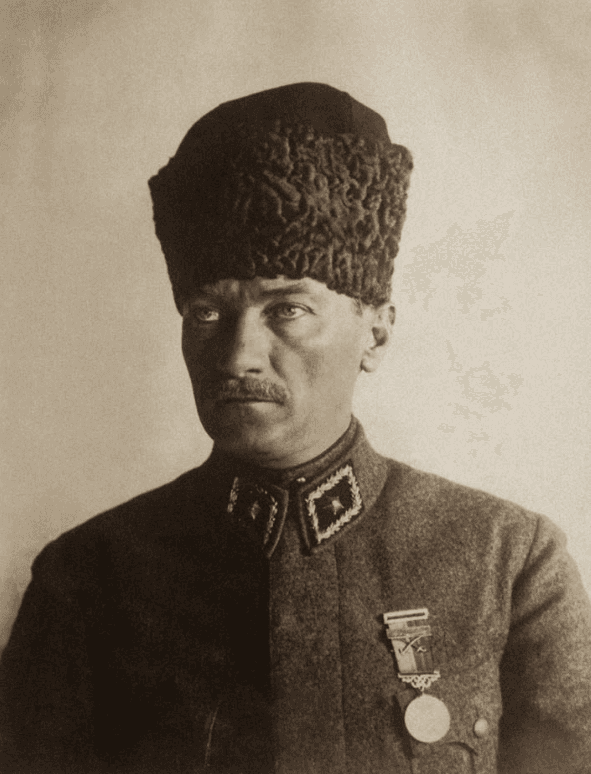
Origins of the term
Kemalism, known in Turkish as Kemalizm or Ataturkculuk, refers to the political ideology established by Mustafa Kemal Ataturk, the founder of the Republic of Turkey. The term encompasses the body of political, economic, and cultural reforms that Ataturk and his associates implemented between 1923 and 1938 to modernize Turkey and establish it as a sovereign, secular, democratic nation-state.
While Ataturk himself rarely used the term "Kemalism," it became the standard label for his reform program after it was codified into the constitution of the Republican People's Party (CHP) in 1931 and later incorporated into the Turkish constitution in 1937.
The Six Arrows
Kemalism is defined by six foundational principles, collectively known as the Six Arrows (Alti Ok). These principles became the official ideology of the CHP and were symbolized by six arrows on the party emblem:
- Republicanism (Cumhuriyetcilik), Sovereignty belongs to the nation, not a monarch or religious authority.
- Nationalism (Milliyetcilik), A civic, territorial nationalism centered on shared citizenship rather than ethnicity.
- Populism (Halkcilik), Equality before the law and the rejection of class-based privilege.
- Statism (Devletcilik), State-led economic development, particularly in industries where private capital was insufficient.
- Secularism (Laiklik), Separation of religious institutions from the affairs of the state.
- Revolutionism (Devrimcilik), A commitment to ongoing reform and modernization.
Each of these principles addressed a specific challenge facing the new republic. Together, they provided a framework for transforming a predominantly agrarian, multi-ethnic, theocratic empire into a modern nation-state with Western-style institutions.
Historical context
Kemalism emerged from the collapse of the Ottoman Empire following World War I. The Ottoman state, which had ruled much of the Middle East, North Africa, and southeastern Europe for over six centuries, was dismembered by the Treaty of Sevres in 1920. The treaty would have reduced Turkey to a small state in central Anatolia, surrounded by zones of foreign control.
Mustafa Kemal led the Turkish War of Independence (1919–1923) against occupying forces, ultimately securing international recognition of Turkey's sovereignty through the Treaty of Lausanne in 1923. With the republic declared on October 29, 1923, Ataturk embarked on a comprehensive program of reform.
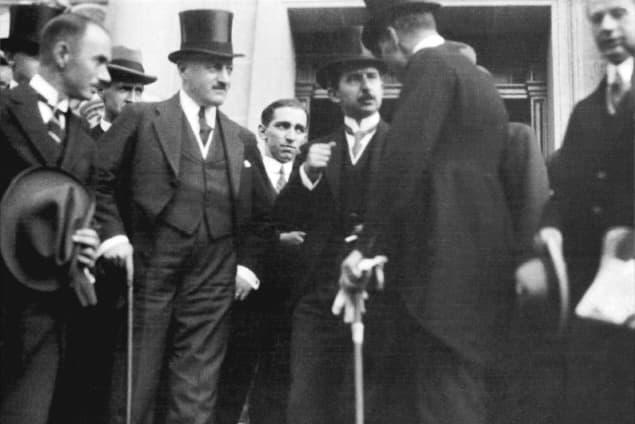
The reform program
Kemalist reforms touched virtually every aspect of Turkish society. The caliphate was abolished in 1924, removing the last institutional link between religious authority and the state. Religious courts were replaced with a secular legal system modeled on European codes, the Swiss Civil Code, the Italian Penal Code, and the German Commercial Code.
The Arabic script was replaced with a Latin-based alphabet in 1928, a change designed to increase literacy and orient Turkey toward the West. The Islamic calendar was replaced by the Gregorian calendar, the metric system was adopted, and Sunday replaced Friday as the weekly day of rest.
Women gained the right to vote and stand for election in 1934, earlier than in many European democracies. Education was secularized, and new universities were established with faculty recruited from across Europe.
Kemalism as a political ideology
Kemalism is sometimes compared to other modernization ideologies of the early 20th century, but it has distinctive features. Unlike communism, it did not seek to abolish private property. Unlike fascism, it was not built on a cult of violence or racial supremacy. Unlike liberal democracies of the period, it maintained a single-party system during its founding decades, viewing multi-party competition as premature for a society undergoing rapid transformation.
Scholars have debated whether Kemalism is best understood as a form of authoritarian modernization, a variant of Enlightenment rationalism applied to a non-Western context, or a pragmatic response to the specific conditions of post-Ottoman Turkey. It drew selectively from Western models but was not a wholesale adoption of any single ideology.
Legacy and continuing relevance
Kemalism remains central to Turkish political identity, though its meaning and application are contested. The Turkish military historically positioned itself as the guardian of Kemalist principles, intervening in politics multiple times when it perceived threats to secularism or national unity.
In contemporary Turkey, debates over Kemalism intersect with questions about religious freedom, democratic governance, minority rights, and Turkey's relationship with both Europe and the Middle East. Whether one views Kemalism as a progressive force or an imposed ideology depends largely on which of its aspects, secularism, nationalism, statism, or republican governance, one emphasizes.
Kemalism produced one of the most thorough political and cultural transformations of the 20th century.
What is not debated is its historical impact: Kemalism produced one of the most thorough political and cultural transformations of the 20th century, and its legacy continues to shape Turkey and the broader region.