Kemalism in Modern Turkey.
How a century-old ideology continues to shape politics, culture, and identity debates in contemporary Turkey.
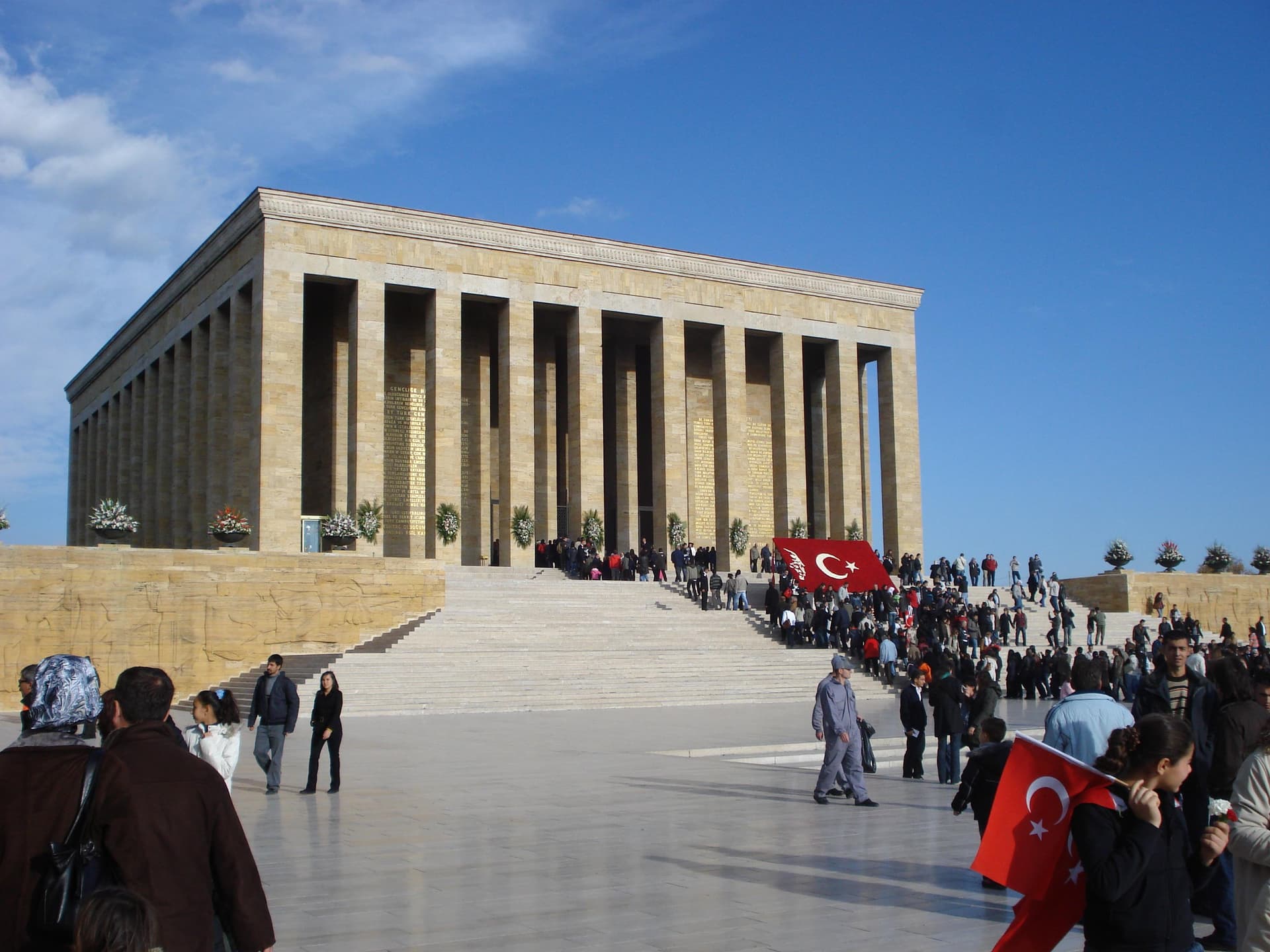
After Ataturk: the single-party era
When Ataturk died in 1938, his close associate Ismet Inonu assumed the presidency. Inonu maintained the single-party system through World War II, keeping Turkey neutral for most of the conflict. The Kemalist establishment viewed the war years as a period of consolidation, deepening the institutional foundations laid in the previous decade.
In 1946, under both internal pressure and the shifting geopolitical landscape of the Cold War, Turkey transitioned to multi-party democracy. The Democratic Party, led by Adnan Menderes, won a decisive victory in 1950, marking the first peaceful transfer of power through free elections. This transition tested whether Kemalist institutions could survive without single-party control, and whether democracy was compatible with the Kemalist project.
The military as guardian
The Turkish Armed Forces historically positioned themselves as the protectors of Kemalist principles, the constitution, and the secular republic. This self-appointed role led to a series of military interventions that shaped Turkish political life for decades:
- 1960. A military coup toppled the Menderes government, which was accused of authoritarian tendencies and undermining secularism. Menderes was tried and executed.
- 1971. A "coup by memorandum" forced the resignation of the civilian government amid political violence between left-wing and right-wing groups.
- 1980. A full military takeover under General Kenan Evren followed years of political deadlock and street violence. The 1982 constitution, written under military supervision, remains in effect today, though heavily amended.
- 1997. The "postmodern coup," in which the military used public pressure and institutional leverage to force the resignation of the Islamist-leaning Welfare Party government led by Necmettin Erbakan.
Each intervention was justified in Kemalist terms, defending secularism, national unity, or democratic order.
Each intervention was justified in Kemalist terms, defending secularism, national unity, or democratic order. But each also raised fundamental questions about whether a system that relied on military intervention to preserve itself could be truly democratic.
Kemalism and political Islam
The most significant political tension in modern Turkey has been between the Kemalist secular establishment and movements rooted in political Islam. Beginning with the National Order Party in 1970, a succession of Islamist-leaning parties challenged the Kemalist consensus on secularism.
The Justice and Development Party (AKP), founded in 2001 by Recep Tayyip Erdogan and Abdullah Gul, represented a new approach. It initially presented itself not as anti-Kemalist but as democratically reformist, seeking EU membership, expanding civil liberties, and reducing military influence over politics. In its early years, the AKP was praised by many liberals, both domestic and international, for democratizing Turkish politics.
Over time, the relationship between the AKP and Kemalist principles became more openly adversarial. Changes to the education system, the judiciary, media regulation, and eventually the constitutional structure shifted the balance of power away from traditional Kemalist institutions. The failed coup attempt of July 2016 and the subsequent transition to a presidential system in 2018 further reshaped the institutional landscape.
Culture and identity
Beyond formal politics, Kemalism continues to shape Turkish cultural identity in ways both visible and subtle. The annual commemoration of Ataturk on November 10, the ubiquity of his image in public spaces, and the constitutional protections around his legacy reflect a society that still actively engages with its founding ideology.
Youth Day (May 19), Republic Day (October 29), and Victory Day (August 30) are national celebrations rooted in Kemalist history. Schools teach a curriculum shaped by Kemalist principles. The Turkish language itself bears the marks of the alphabet reform and language modernization that Ataturk championed.
At the same time, Turkey's cultural landscape has diversified significantly. Religious expression has become more visible in public life. Kurdish cultural identity, long suppressed under the civic nationalist framework, has gained greater recognition. A younger generation engages with Kemalism not as received doctrine but as one perspective among several in an increasingly pluralistic society.
Kemalism and the Kurdish question
Kemalist civic nationalism defined Turkish identity around citizenship, language, and territory rather than ethnicity. In theory, this was inclusive, anyone within the borders of the republic was a Turk, regardless of origin. In practice, this framework left little room for the cultural and linguistic expression of non-Turkish ethnic groups, particularly the Kurds, who constitute roughly 15–20% of Turkey's population.
For decades, Kurdish language education, broadcasting, and publication were restricted. The armed conflict between the Turkish state and the PKK (Kurdistan Workers' Party), which began in 1984, brought the issue to a head. Various governments have pursued both military and diplomatic approaches, with periods of engagement followed by renewed conflict.
The Kurdish question poses a fundamental challenge to Kemalist nationalism: can a civic identity absorb cultural diversity, or does it require a degree of cultural uniformity that marginalizes minorities? This question remains unresolved and is central to contemporary Turkish politics.
Turkey between West and East
Ataturk oriented Turkey firmly toward the West, adopting European legal codes, pursuing secular governance, and embracing Western cultural norms. Turkey joined NATO in 1952, applied for EU membership, and maintained close ties with Western democracies throughout the Cold War.
In the 21st century, Turkey's geopolitical orientation has become more complex. Relations with the European Union have stalled, while Turkey has pursued a more active role in the Middle East and Central Asia. This shift has prompted debate about whether Turkey is abandoning Kemalist Western orientation or simply adapting it to a changed world.
The future of Kemalism
Kemalism today is not a fixed ideology but a living political tradition, interpreted differently across the political spectrum. For some Turks, it represents secularism, modernity, and national sovereignty. For others, it evokes an authoritarian past, cultural suppression, or an imposed Western identity.
What seems clear is that the questions Kemalism raised, about the role of religion in public life, the meaning of national identity, the balance between state power and individual liberty, and Turkey's place in the world, remain as relevant as ever. The answers may evolve, but the questions endure.