Populism.
The third of the Six Arrows, equality before the law and the rejection of class-based or aristocratic privilege.
Definition
Halkçılık, often translated as populism, meant equality before the law and the rejection of class-based or aristocratic privilege. It was not populism in the modern sense of appealing to popular sentiment against elites. Rather, it asserted that no individual or group holds inherent superiority over another.
The principle also rejected class struggle as a political framework. Unlike Marxist ideologies, Kemalist populism did not divide society into bourgeoisie and proletariat. It argued that in a developing country emerging from the ruins of empire, all citizens shared the common project of national construction. Class conflict was seen as a luxury that a young republic could not afford, and a distortion of the reality that all segments of society had sacrificed in the War of Independence.
Historical context
Ottoman society was structured around title and rank. The designations pasha, bey, and efendi were not mere courtesies but markers of formal social standing. Access to land, legal protections, and political influence depended heavily on one's position within this hierarchy.
Feudal land structures persisted in eastern Anatolia, where large landowners, ağas, exercised near-absolute authority over tenant farmers. The millet system created separate legal frameworks for different religious communities, meaning that the law itself varied depending on who you were rather than what you had done.
Halkçılık sought to replace these hierarchies with a single, undifferentiated citizenry. Where the Ottoman system had defined people by rank, religion, and communal affiliation, the republic would recognize only citizens, equal before the law and equal in their claim on the state's protection.
Key reforms
Ottoman titles of nobility were abolished, eliminating the formal markers of aristocratic standing that had structured social life for centuries. The distinction between pasha and peasant, bey and commoner, was erased in law, even if social realities changed more slowly.
The Surname Law of 1934 required all citizens to adopt fixed family names, ending naming conventions that had signaled aristocratic lineage, religious community, or regional origin. The law was an equalizing measure, a citizen's name would no longer automatically reveal their place in a social hierarchy.
Equal legal status was established for all citizens regardless of religion or ethnic origin. The adoption of the Swiss Civil Code in 1926 replaced the fragmented Ottoman legal system, in which different communities lived under different laws, with a single, secular code applicable to everyone.
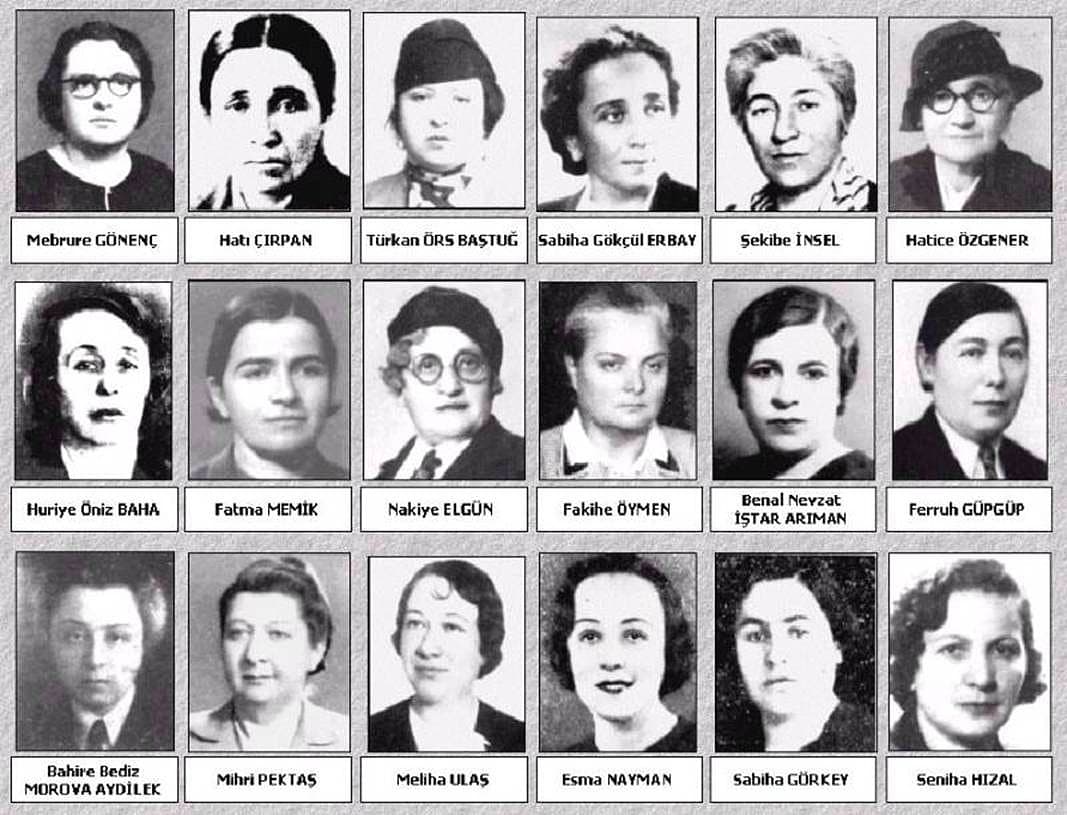
Women's suffrage extended the principle of equality across gender. Women gained the right to vote in local elections in 1930 and in national elections in 1934, earlier than in France, Italy, or Switzerland. Eighteen women were elected to the Grand National Assembly in 1935, a milestone that many European democracies would not reach for decades.
Modern relevance
The principle's rejection of class-based politics shaped Turkey's political landscape for decades, distinguishing Kemalism from both Marxist movements on the left and conservative movements that defended traditional hierarchies. The single-party era's emphasis on national solidarity over class conflict left a lasting imprint on Turkish political culture.
Today, rising economic inequality and debates about social mobility have renewed interest in what halkçılık means in practice. Turkey's Gini coefficient and the gap between urban and rural living standards raise questions about whether formal legal equality is sufficient, or whether the principle demands more substantive measures to ensure equal opportunity.
The tension between formal legal equality and substantive social equality remains relevant. Critics argue that equality before the law means little when access to education, healthcare, and economic opportunity varies dramatically by region, class, and gender. Defenders of the original principle counter that it established an essential foundation, the recognition that no one is inherently above the law, upon which further reforms can build.
“There is no mastery over the people. There is service. Whoever serves this nation becomes its master.”, Mustafa Kemal Atatürk, Nutuk, 1927